Many of our men's wetsuits are discounted, and we check our prices daily. See every current offer in sale wetsuits. Standard UK delivery is free on orders over £75, and you have 30 days to return a wetsuit that doesn't fit.
In UK water, a 3/2mm wetsuit covers June to September, a 4/3mm covers April, May and October (with boots and gloves in April and October), and a 5/4mm with boots, gloves and a hood covers November to March. UK sea temperatures average around 7 to 10°C in February and March and 16 to 17°C in August, and the North East runs 1 to 3°C colder than Cornwall all year.
Average sea temperature: Cornwall / North East
Sea temperatures are long-term monthly averages for Newquay and Tynemouth from seatemperature.org. Wind, rain and how long you stay in all change how cold it feels.
The suit for each month comes from our wetsuit buying guide.
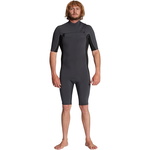
Through the warmer months most people surf in a 3/2mm full suit, and in June some get away with short sleeves. On the warmest days in the South West a shorty is enough. For lighter cover there are 2mm wetsuits and long johns too.
A 4/3mm wetsuit covers the in-between months, when the air has warmed or cooled but the water lags behind. Add boots and gloves in April and October. Some people still reach for one on cooler days in September.
From November most people move up to a 5/4mm wetsuit with boots and gloves, and from December a hood as well. March is when UK water is at its coldest. A hooded wetsuit saves buying a separate hood, and the right boots and gloves let you keep using your suit for more of the year.
Our men's wetsuits run from XS to 4XL, and some styles come in tall (T) and short (S) fits. Brands size differently, so measure yourself first, then check your chest, waist and height against the size guide on each product page. A good fit is like a second skin: close everywhere, with no baggy areas for cold water to flush through, but loose enough to touch your toes and swing your arms. More on sizing in our buying guide.
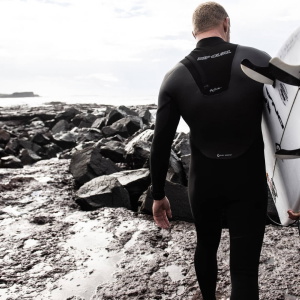
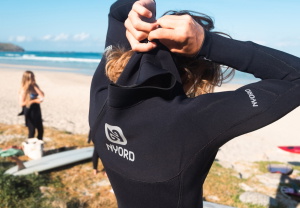
A back zip is the simplest to get in and out of, and the full-width opening suits broader builds, but the long zip limits stretch across the shoulders and lets in more water. A chest zip, now the most common style, flexes better across the shoulders and lets in less water; getting into one takes a little practice. Zip-free suits seal with overlapping panels and are mostly made for performance and competition. Compare them in our buying guide.
Our wetsuit buying guide goes into more depth on thickness by month, sizing, zips, boots, gloves and hoods and aftercare.
Watch:
Read:
Yes, snug all over. A dry wetsuit always feels tighter than a wet one, so don't go up a size on that alone. If you can touch your toes and move your arms freely, it fits.
Most people wear nothing or just swimwear. A rash vest stops rubbing at the neck and underarms and helps the suit slide on, and in winter a thermal top adds warmth without bulk. Skip cotton, which holds cold water against you. More on what to wear underneath.
Not for most people. Our month-by-month guide puts a 4/3 with boots and gloves in April and October, and a 5/4 from November to March, with a hood from December.

.jpg?width=150)
.jpg?width=150)
.jpg?width=150)
.jpg?width=150)
.jpg?width=150)